Pipeline Experiments
The Lost Forest was my exploration into how emerging immersive tools could be integrated with traditional 3D animation workflows to create a new hybrid visual language. Created using Quill, Autodesk Maya, and the Adobe Creative Suite, the project combined the expressive, painterly qualities of VR animation with the structure, depth, and cinematic control of a traditional 3D pipeline.
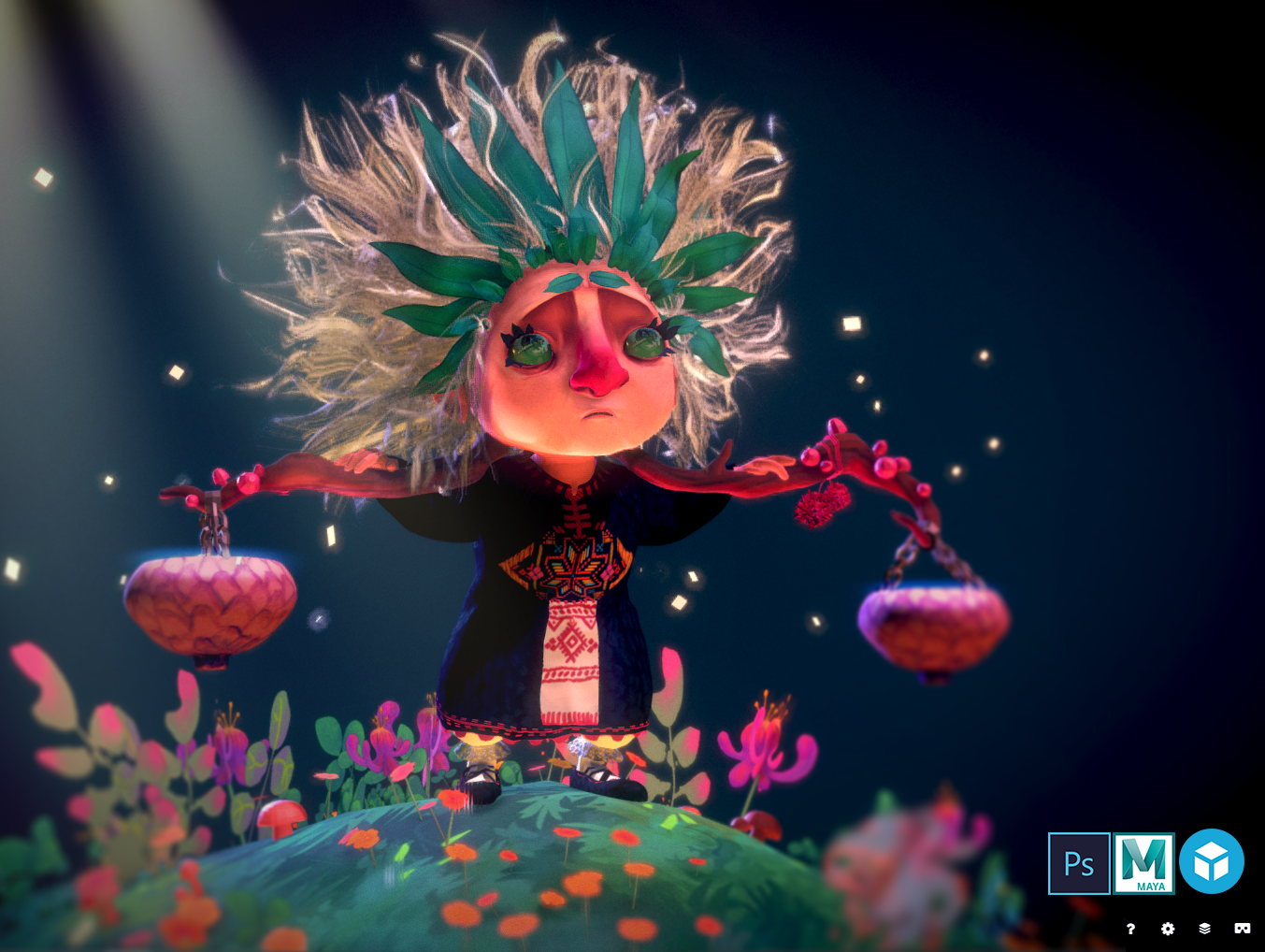
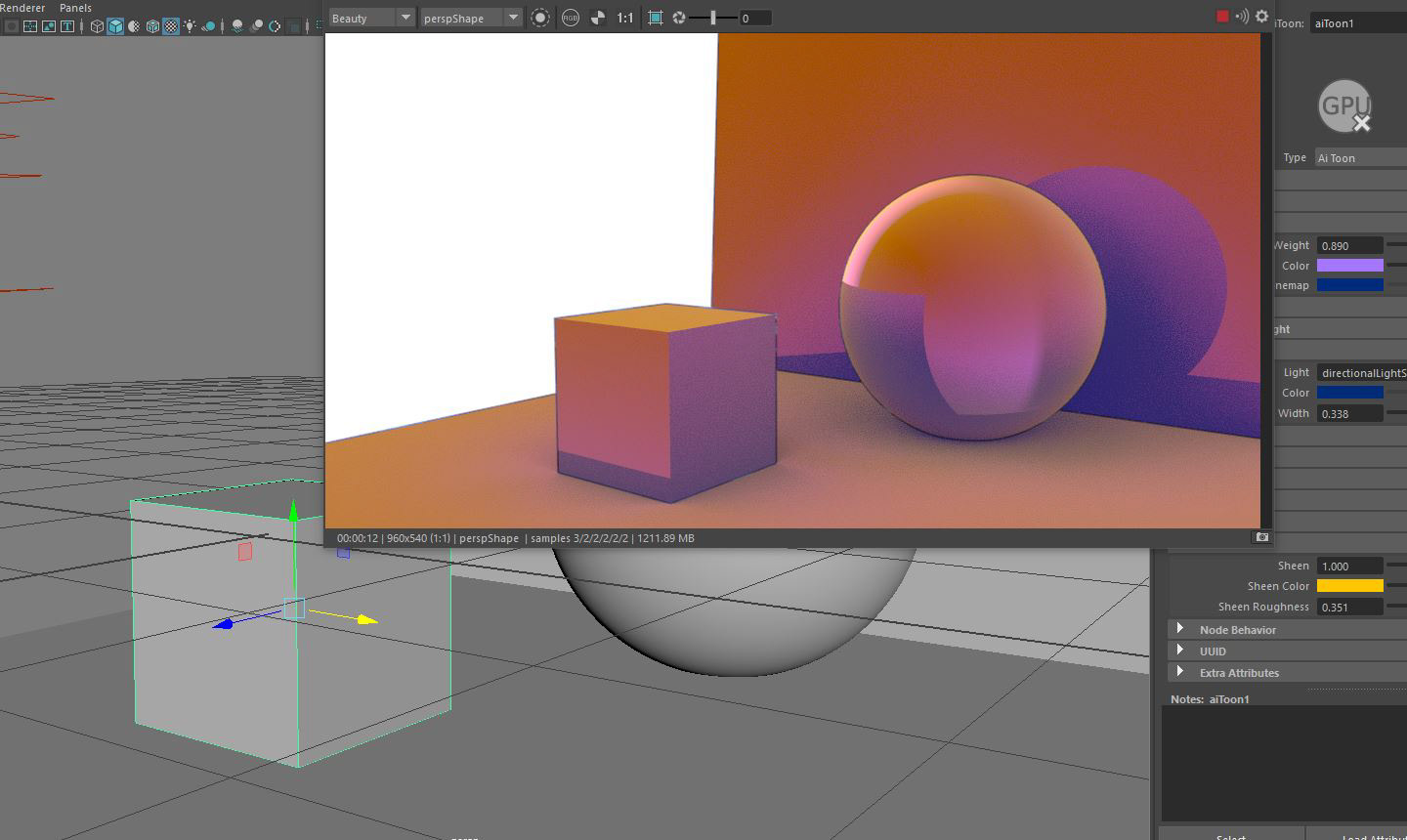
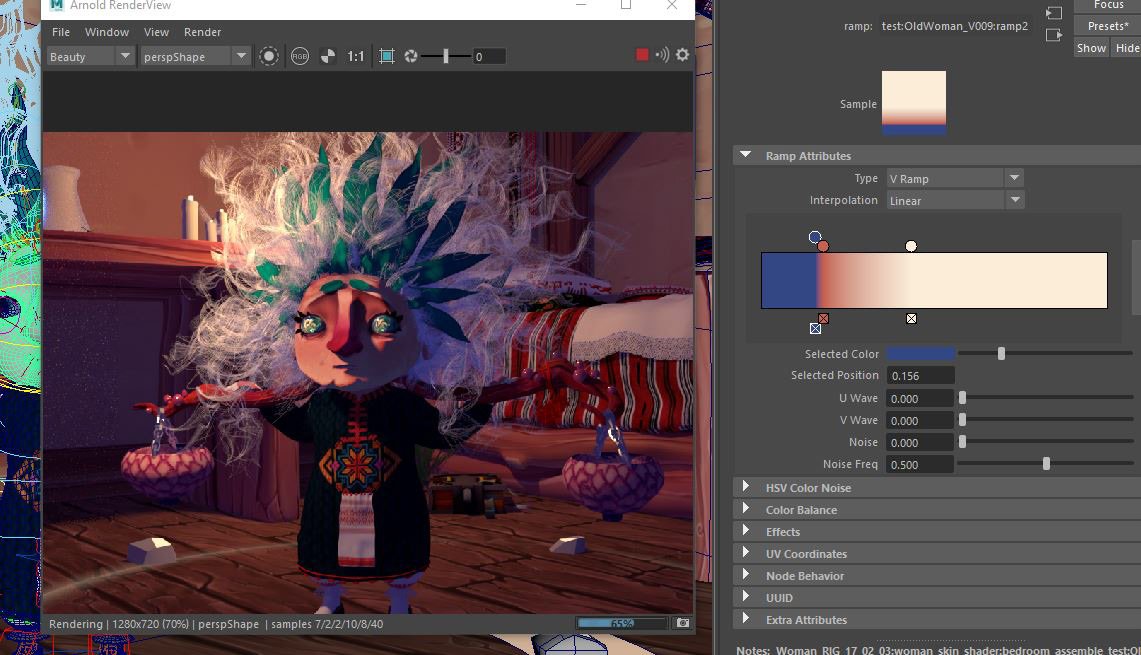
A core design challenge was finding a way for these two mediums to blend. The Quill sequences needed to preserve the handcrafted feeling of VR illustration, while the Maya sequences required a different visual identity that could expand the world without feeling disconnected. From the beginning I focused on designing a relationship between the mediums, to create a cohesive look.
To achieve this, I developed a bespoke stylised rendering approach in Autodesk Maya through extensive experimentation with toon shading, painted textures, lighting, and colour systems. I refined the use of Toon shader workflows, building a custom setup that enhanced the illustrated quality of the 3D assets.
The process became an exercise in visual research, looking at how traditional animation principles, painterly design, and procedural tools could work together to create a distinctive aesthetic.
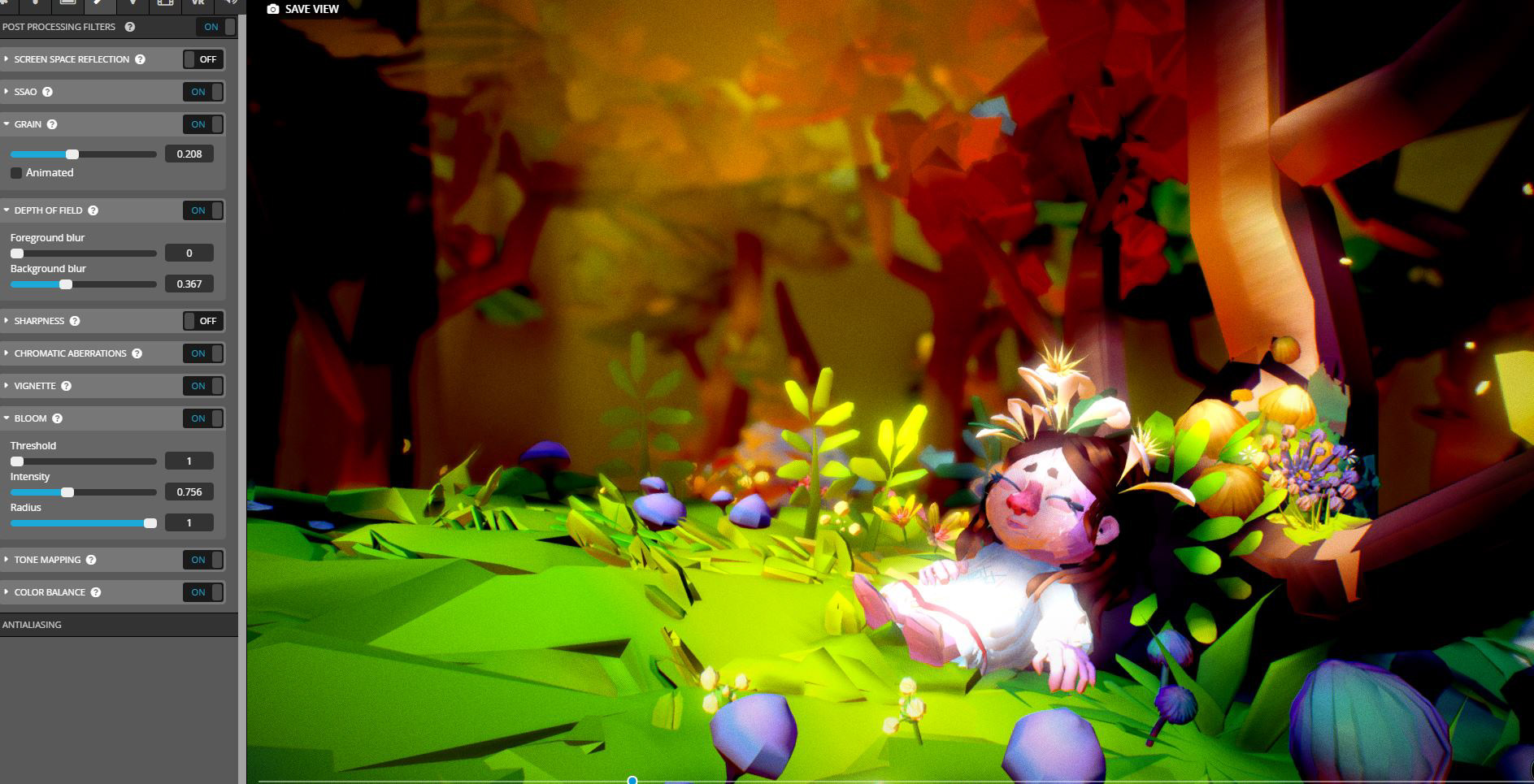
The Lost Forest represents my approach to creative technology which revolves around experimenting with emerging tools, understanding their limitations, and designing new workflows that unlock creative possibilities. This production aimed to investigate the increased efficiency of implementing emerging creative VR tools into traditional 3D animation. My dicovery that it increased the output by 50% + was recognised for its innovation potential by the Northern Irish Department for the Economy with a Silver Level Innovator Badge. By combining VR animation with traditional 3D techniques, I successfully explored how technology can expand artistic expression and speed up production timelines while maintaining storytelling qualities and emotional impact.
From virtual reality painting to Unreal Engine.
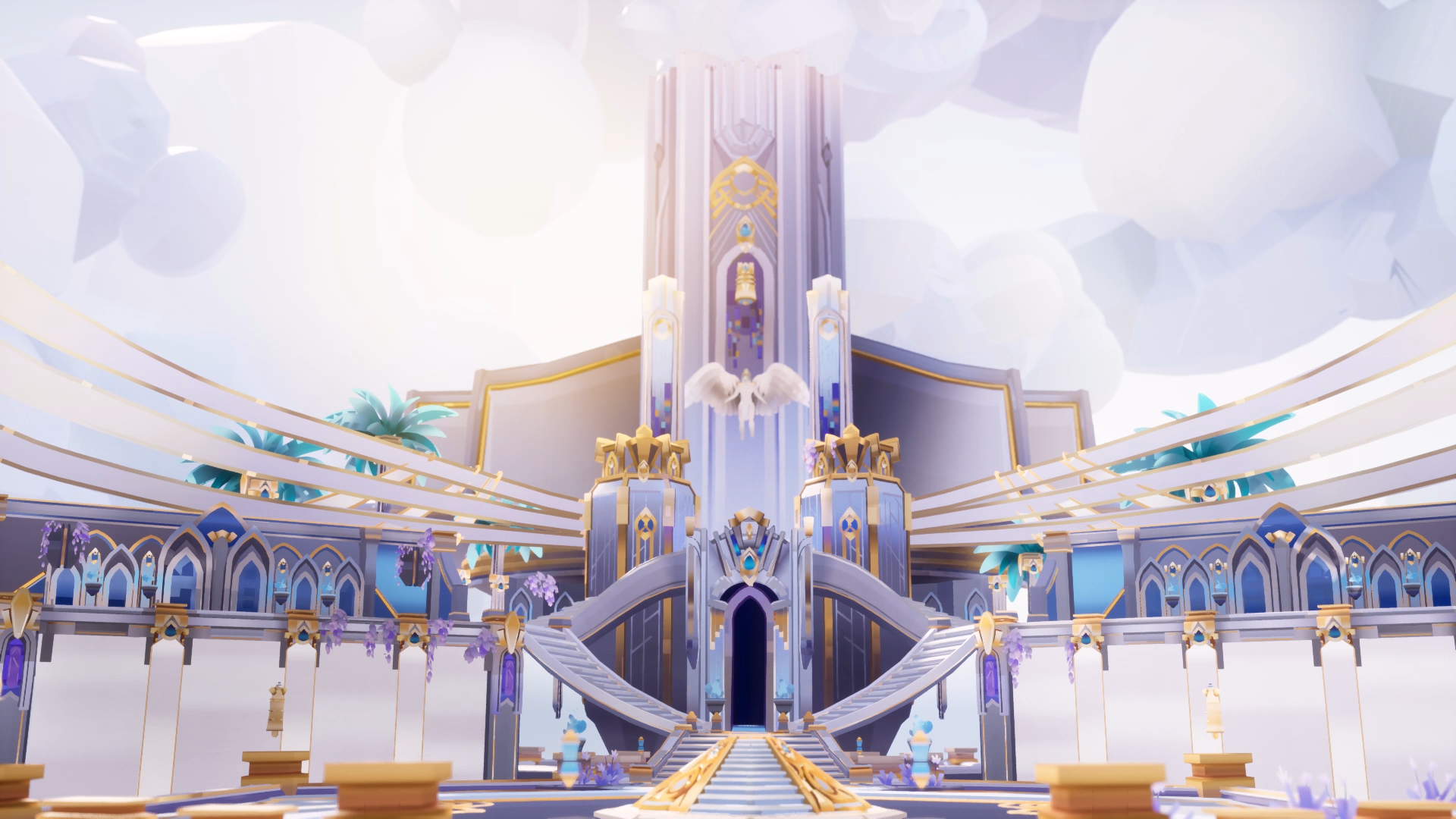
Driven by desire to push the boundaries of immersive creation, I explored one of the earliest Quill to Unreal Engine 4 workflows before an established standard production pipeline existed. As part of the experiment, I recreated a game environment as a VR illustration, learned the scene assembly process, configured lights and shaders to preserve the artwork's painterly qualities, and set up a cinematic camera sequence within Unreal Engine.
The project was about discovering new workflows and testing how VR illustration could integrate with real time engines to create a more efficient pipeline for 3D media content.
Thank you, mom
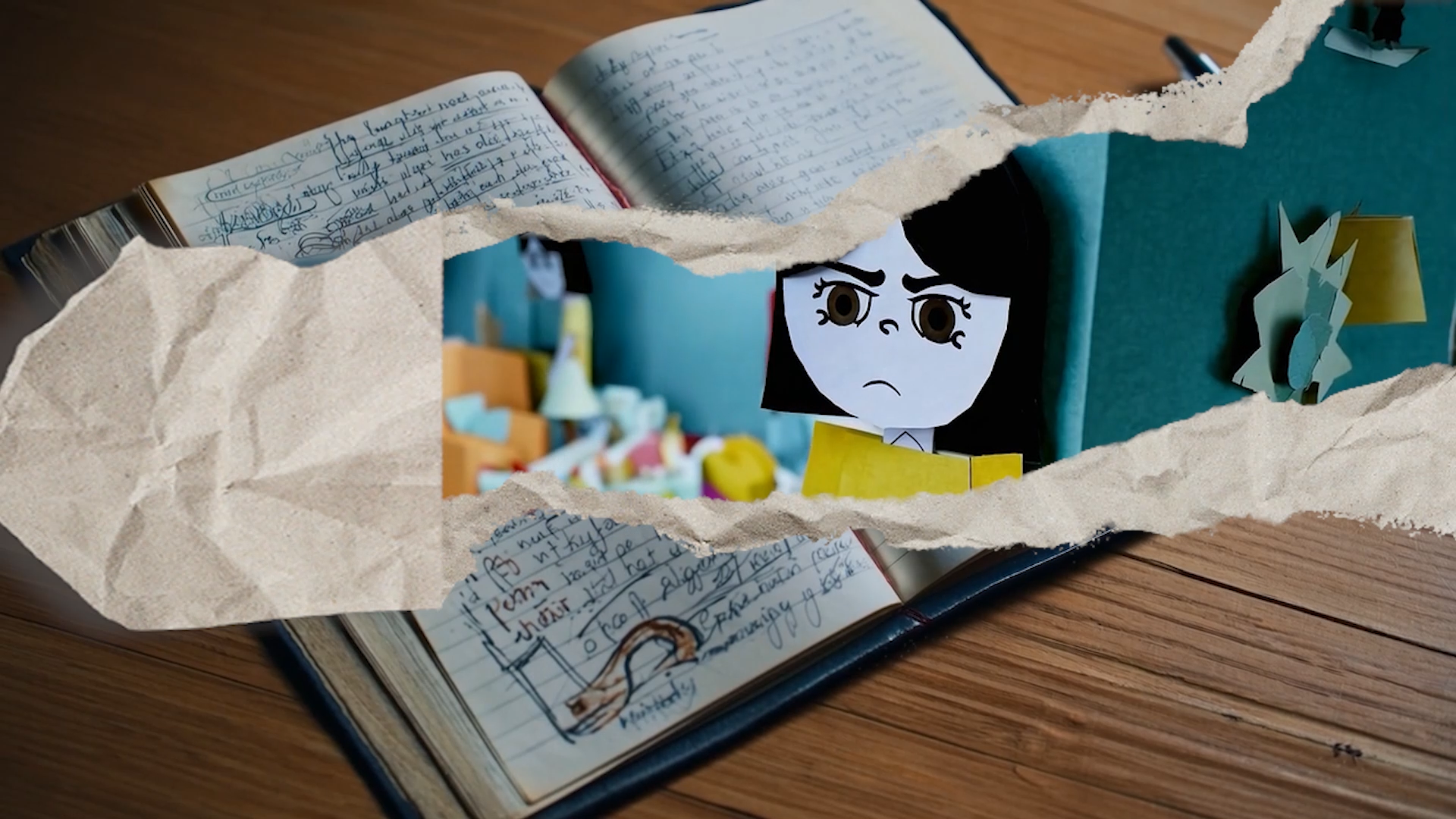
As Art Director and Animator on Thank you, mom, directed by Emmy Award winning storyteller Michaela Ternasky-Holland, I helped shape one of the first films created with early access to OpenAI's Sora as part of the Tribeca Festival × OpenAI Sora Shorts programme. Working within a tight deadline and alongside a globally distributed team of artists, technologists, and filmmakers, I helped develop a hybrid visual pipeline that merged handcrafted paper transitions, illustration, colour design, and AI-generated video into a cohesive cinematic language.
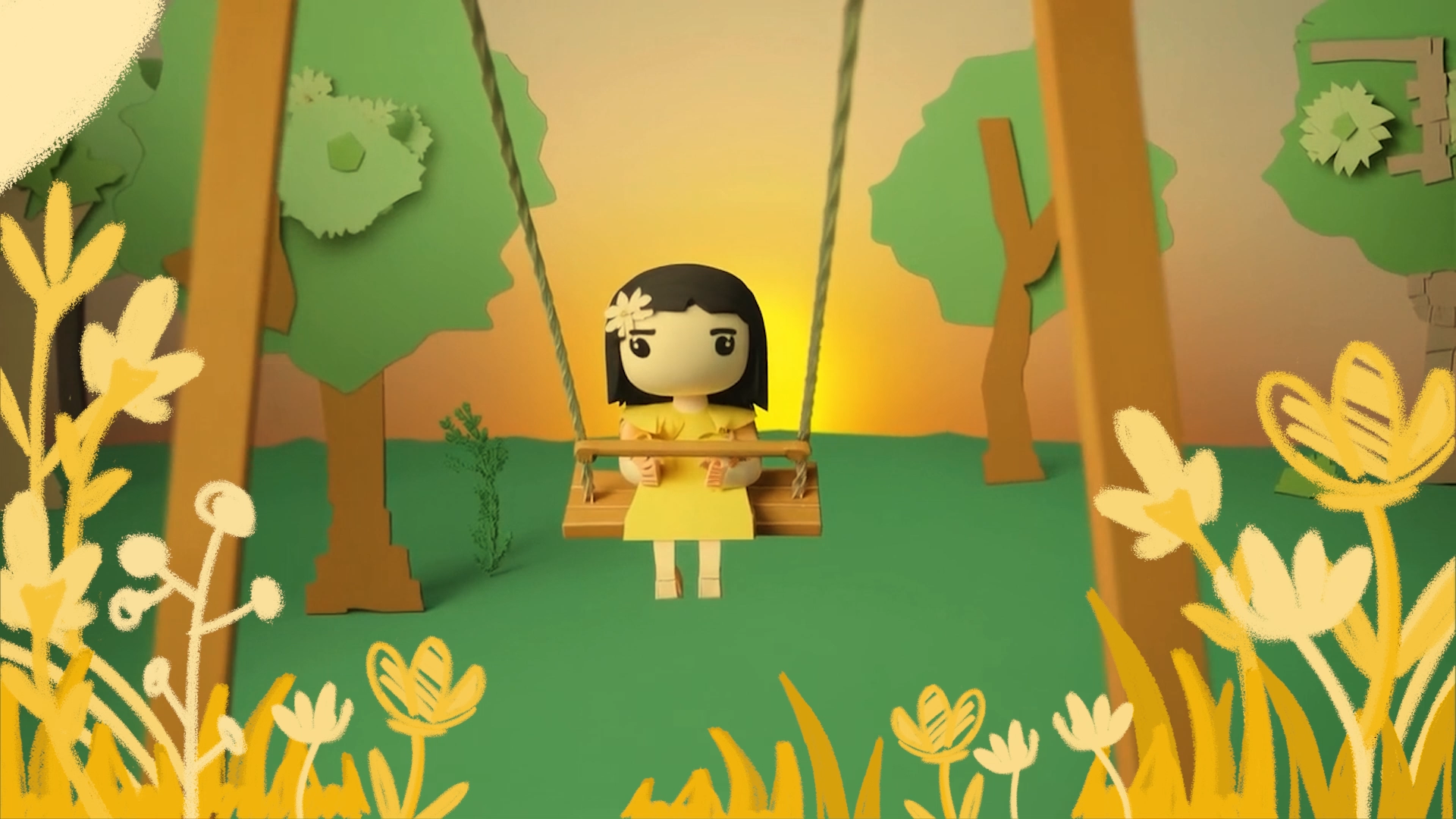
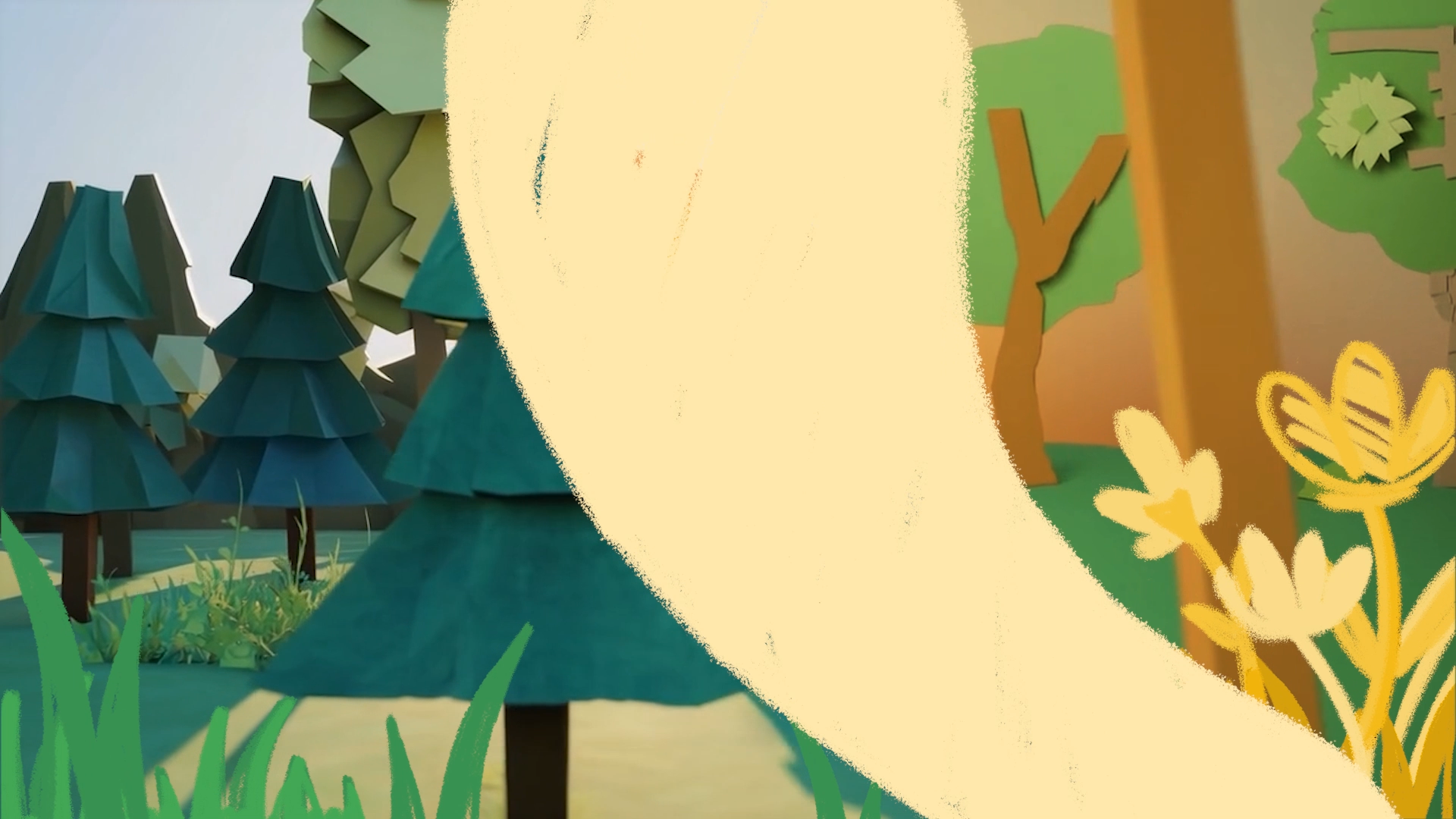
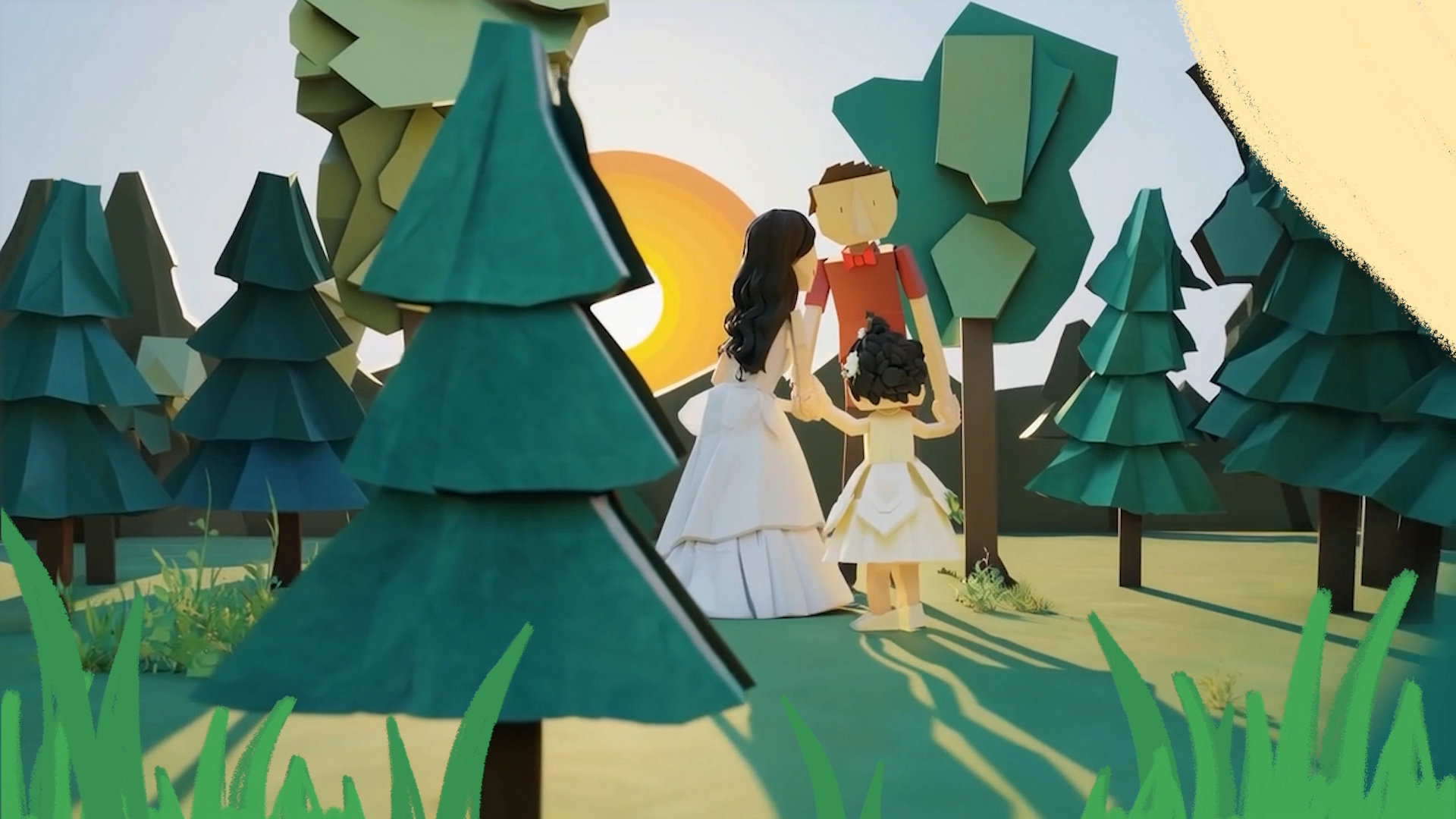
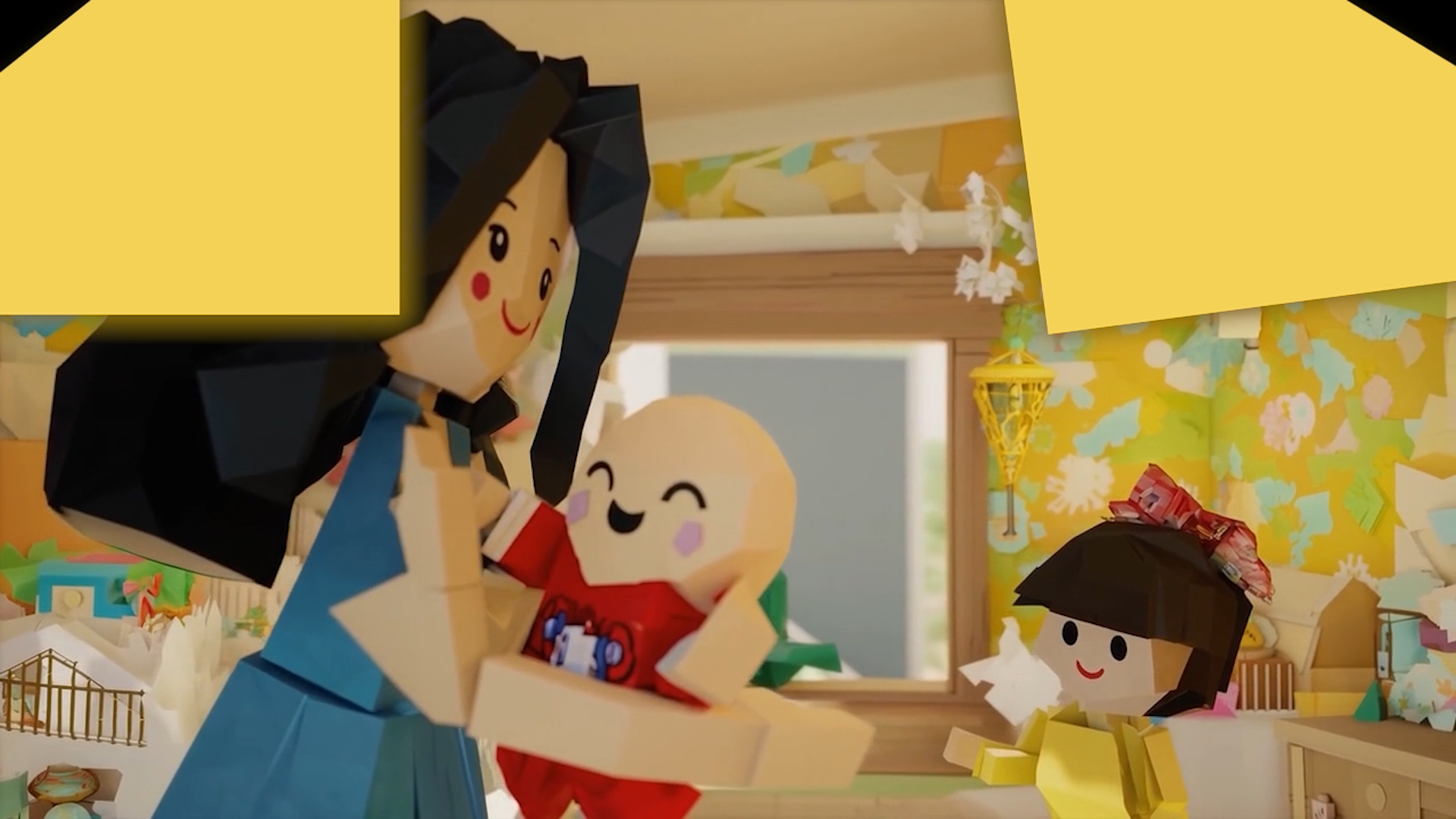
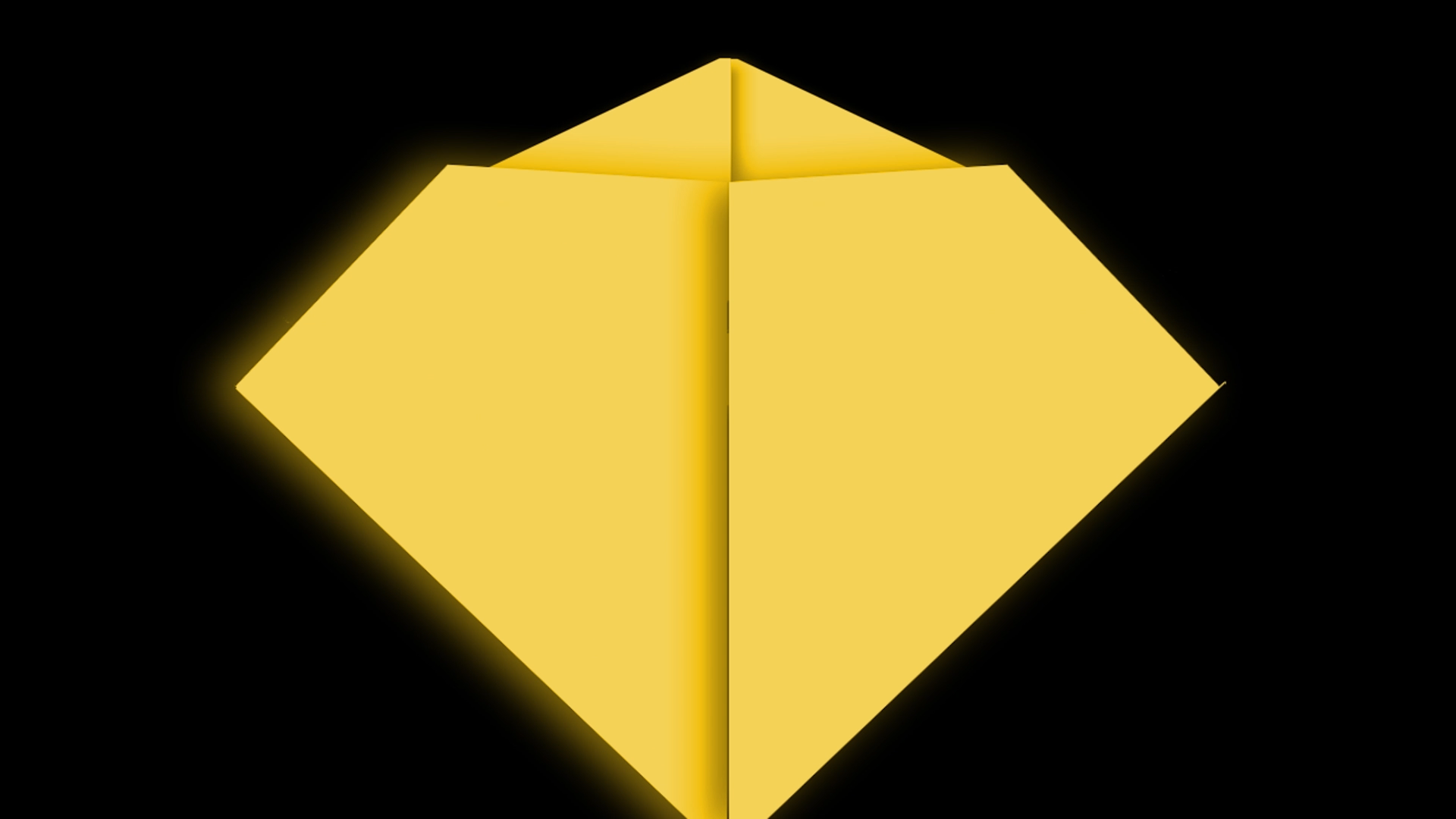
I collaborated closely with the director to experiment with prompts, evaluate generated sequences, and curate the visuals that best served the emotional arc of the story. Beyond establishing the film's colour journey and completing the final colour grade, I translated emerging techniques into a practical workflow, creating screen recorded process demonstrations, implementing effects directly in Adobe Premiere Pro, and continuously sharing iterative builds with the team.
Holograms and AR
The character of Zorka was developed for Studio Syro's VR game production experiment. The original goal was to contribute a game character created in VR, packaged with three attack animations, an idle cycle and a run cycle. After submitting my design I decided to experiment further, by exporting the asset to Lens Studio, the application used in creating augmented reality Snapchat filters.
The pipeline between Quill and Lens Studio is the same as when using traditional 3D modelling software, however I discovered that including an extra step in the middle through Blender would enhance how the geometry is rendered without further tweaks.
Another thing I was excited to figure out was how to set up the animation for displaying in a Spectre Holodisplay. The result was very effective.
VR Workflow Development
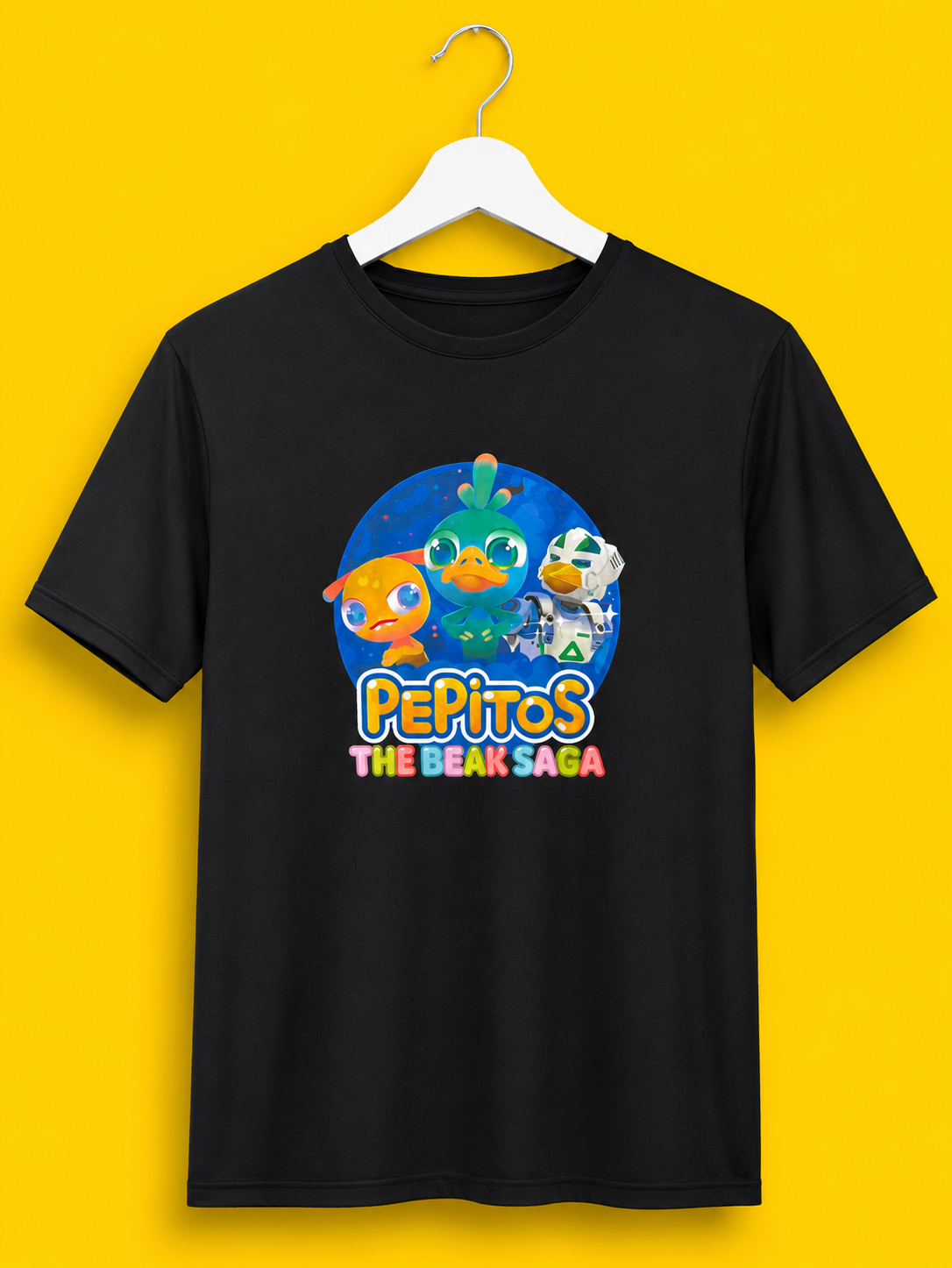
At a time when most immersive experiences still relied on traditional 2D pre-production, PEPITOS: The Beak Saga was developed almost exclusively inside VR, from early sketches and environment blocking to the animatic, visual development, and final experience. This was an opportunity to rethink the production pipeline for immersive storytelling from the ground up, so aside from a handful of concept paintings used primarily as colour references, every creative decision incorporated spatial thinking.
Building an animatic directly in Quill meant that iterating on timing, framing, and pacing was far less linear than in a conventional workflows. However, this approach allowed me to design the experience directly from the audience's perspective instead of having to translate each step into VR later.

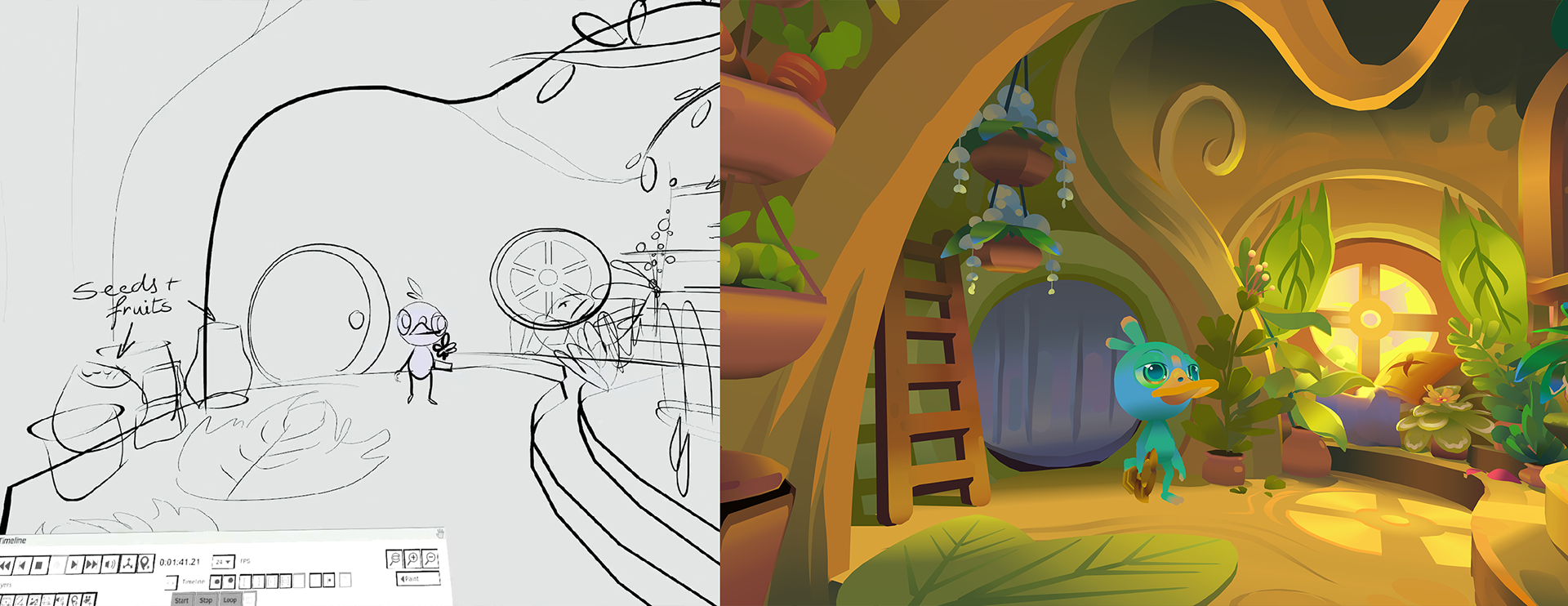
Camera choreography, environmental composition, spatial sound, and scene transitions became interconnected storytelling tools, requiring constant collaboration between animation, sound, and production to ensure every moment felt intuitive and natural.
My role was to shape and maintain this workflow, working closely with the executive producers, sound designers, and multidisciplinary teams to translate an ambitious vision into a practical production process.
Because every environment existed in six degrees of freedom (6DoF), transitions couldn't rely on traditional film language. Camera movements and scene editing had to feel like natural extensions of the world itself, preserving immersion while subtly guiding the audience's attention. What makes PEPITOS: The Beak Saga particularly significant to me is that it challenged conventional production thinking. Immersive media benefits from workflows designed specifically for spatial experiences and by embracing VR as the main production tool, we were able to build an experience where narrative, environment, sound, and movement worked together as one system.
Virtual Museum: MUSIDO
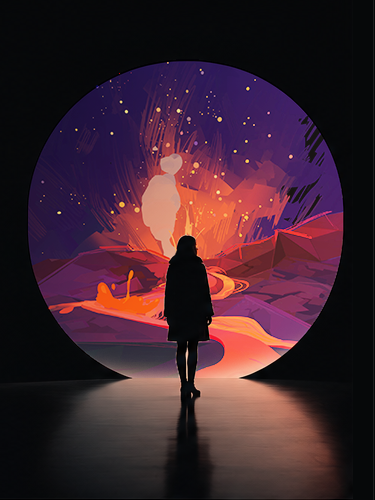
As part of my spatial experiments, I developed the concept and key art for a unique virtual museum named MUSIDO that would take advantage of virtual reality to deliver the full potential of a museal educational experience by integrating emerging artistic techniques with modern technology. This pitch was nominated in the Big Idea competition organised by Queens University.
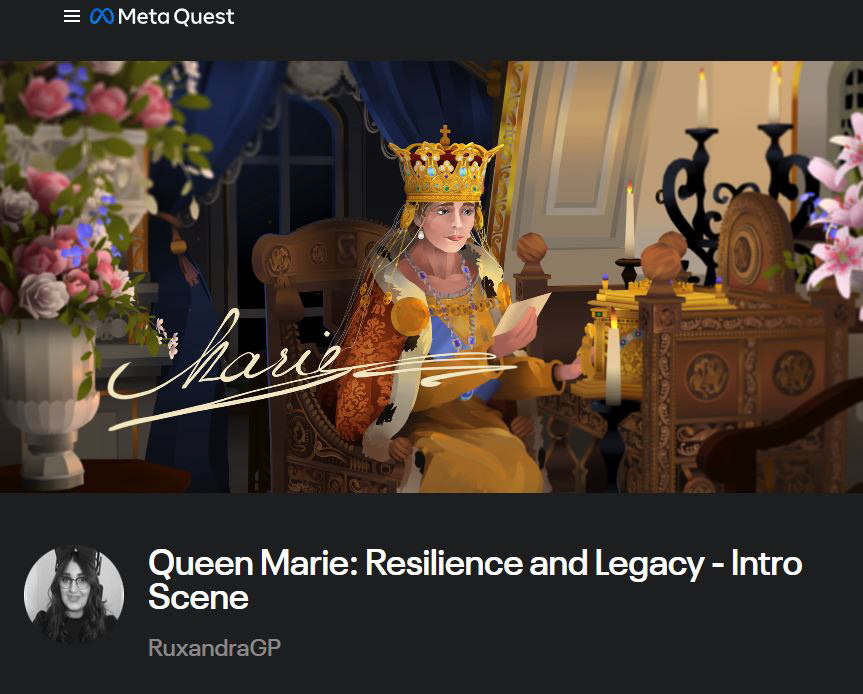
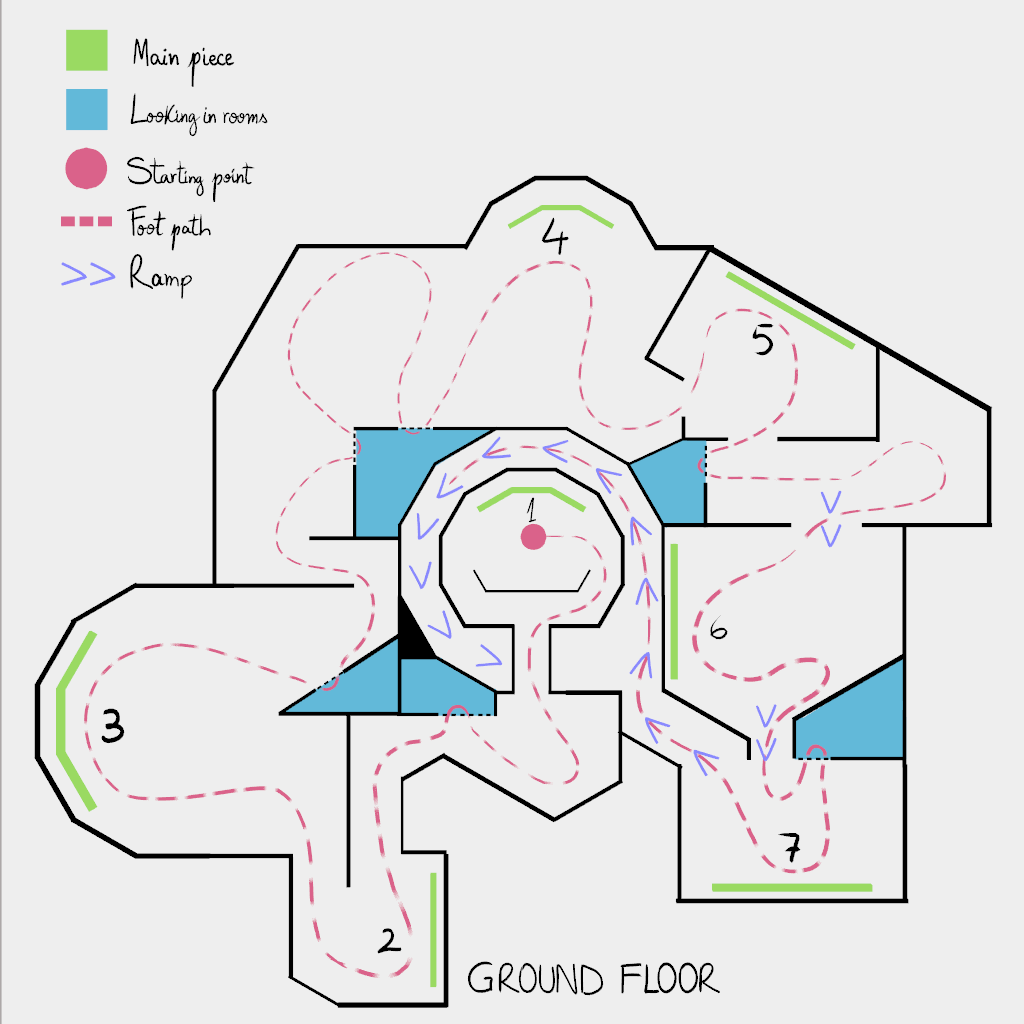
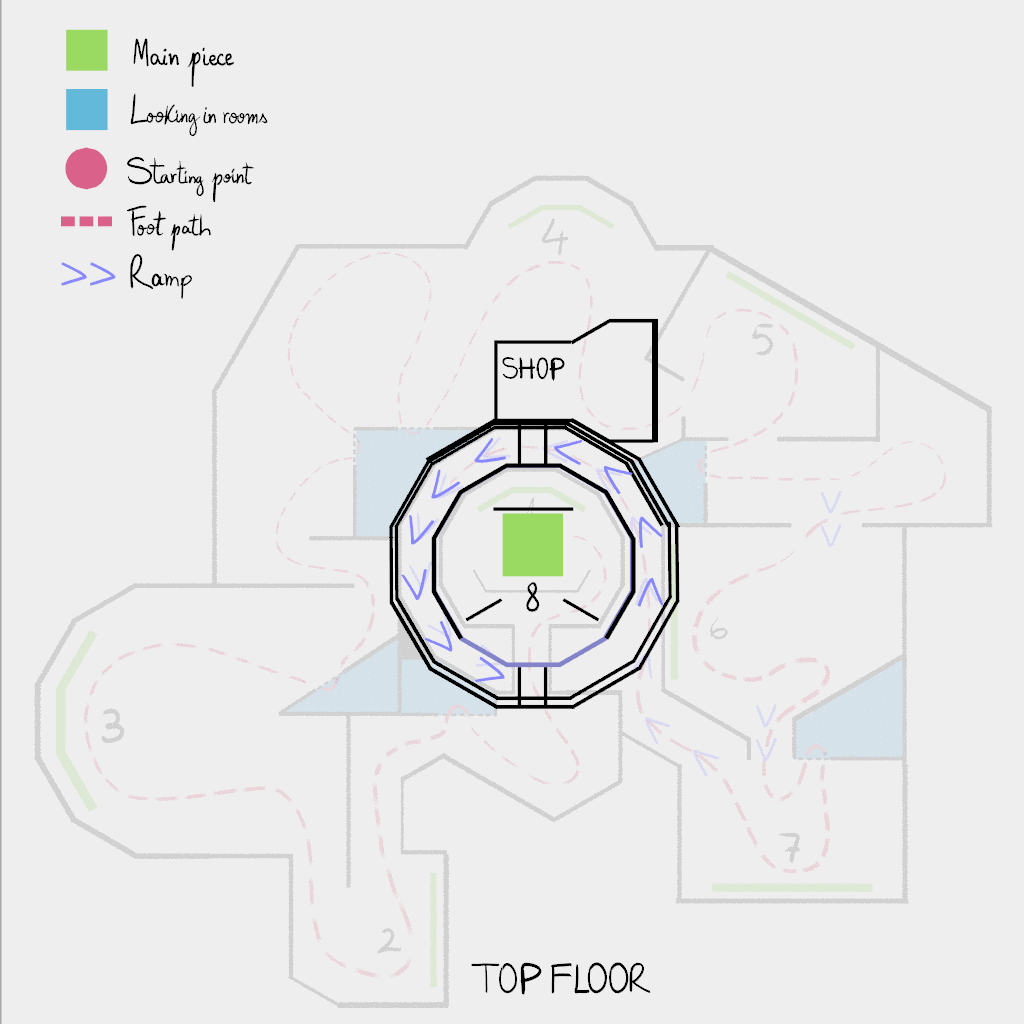
The goal of the MUSIDO immersive experience is not to replace any physical museum experience but to add to what is already available by leveraging the power of the virtual presence to create vivid memories. If you would like to know more about this project and what makes it unique, please get in touch through the 'About' page.
Mozilla Hubs
I explored Mozilla Hubs as an opportunity to rethink how creative 3D work can be experienced. By developing a pipeline between Quill and Mozilla Hubs, I created immersive social spaces that transformed hand drawn VR environments into interactive worlds for events, collaboration, and exploration.
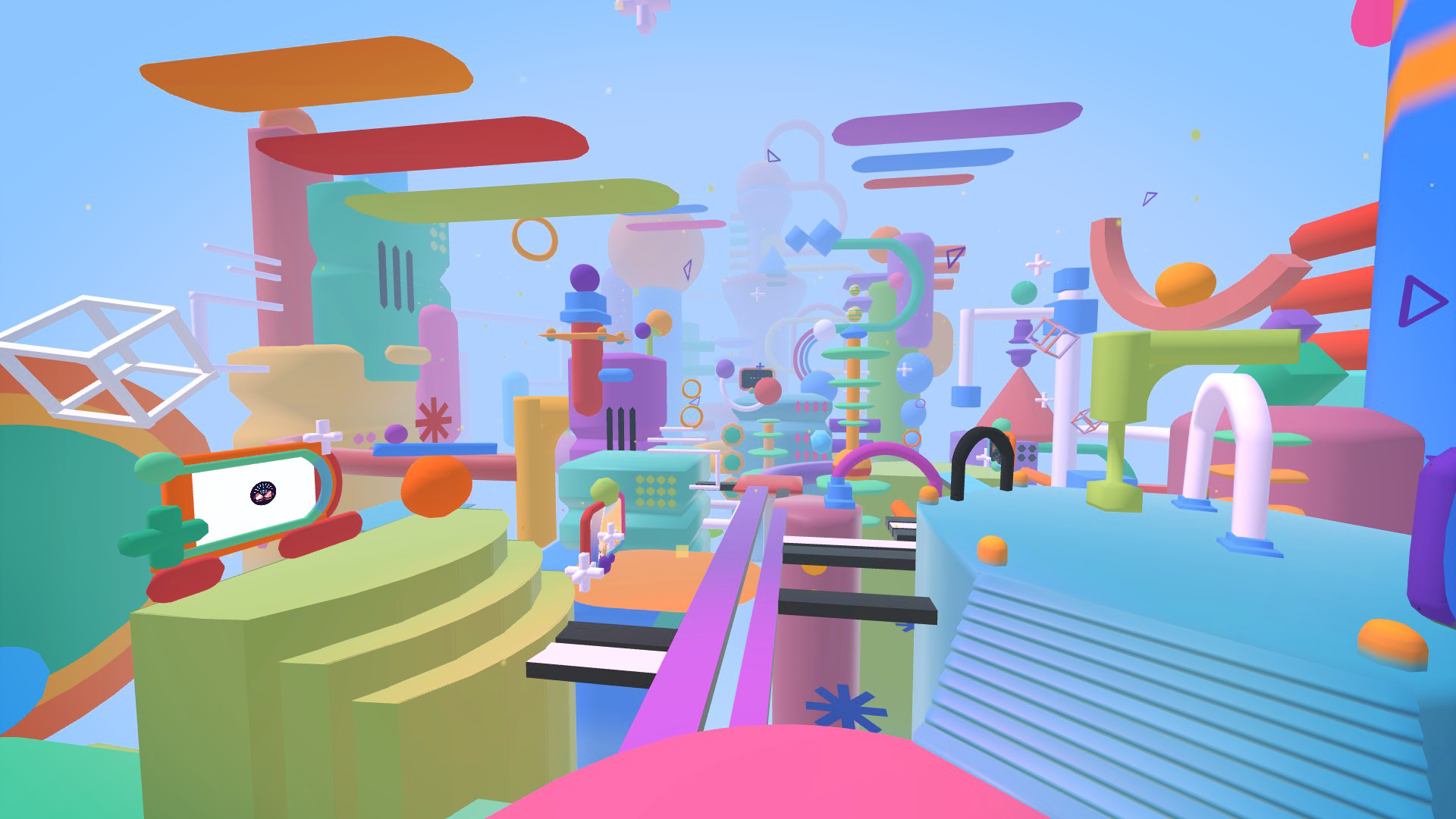
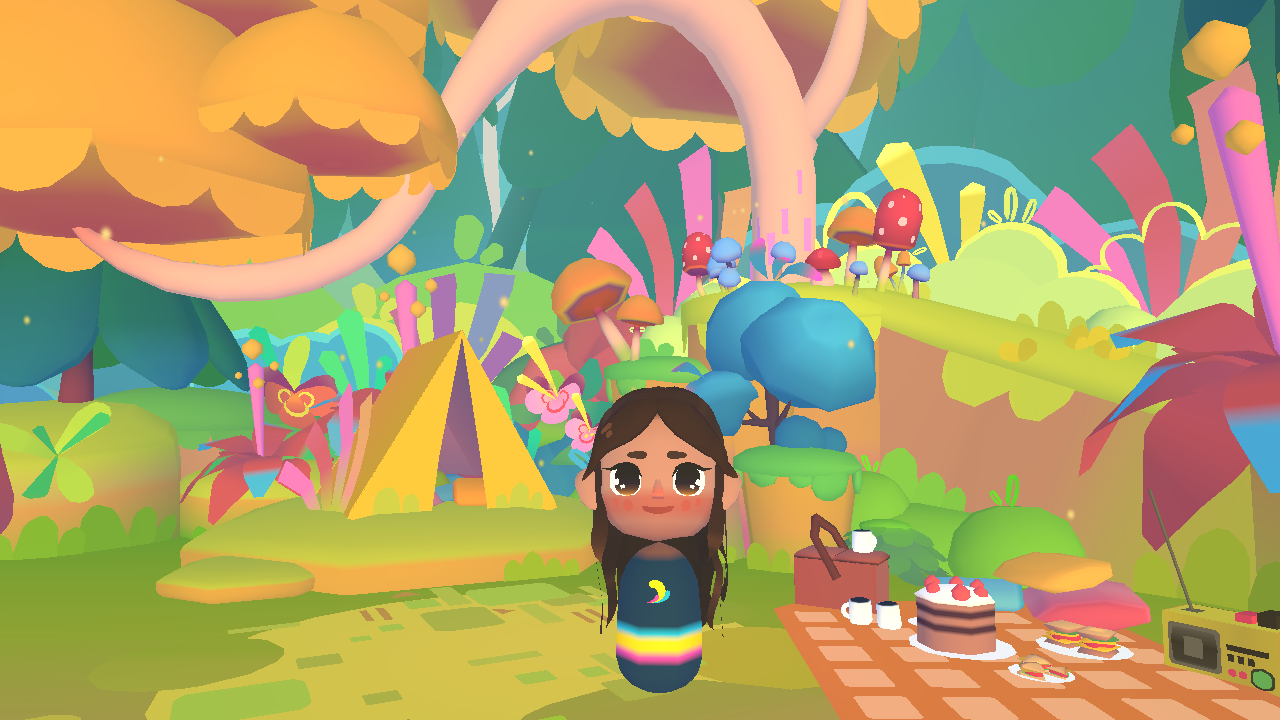
One world was specifically designed to take the role of an online portfolio which would place the viewer and the work inside the same user journey.
The space was intentionally designed as a playful adventure space, where visitors could freely explore while organically discovering four integrated screens showcasing videos of my creative work. This shift to active participation reflects my approach to design innovation. Creating experiences that prioritise discovery, engagement, and emotional connection over passive consumption is at the heart of the process. By considering user behaviour, spatial storytelling, and environmental UX, I explored how XR technologies could transform portfolios into memorable, interactive experiences.
VRChat
I approached VRChat as an opportunity to explore how expressive VR artwork could exist within the technical constraints of social XR platforms.
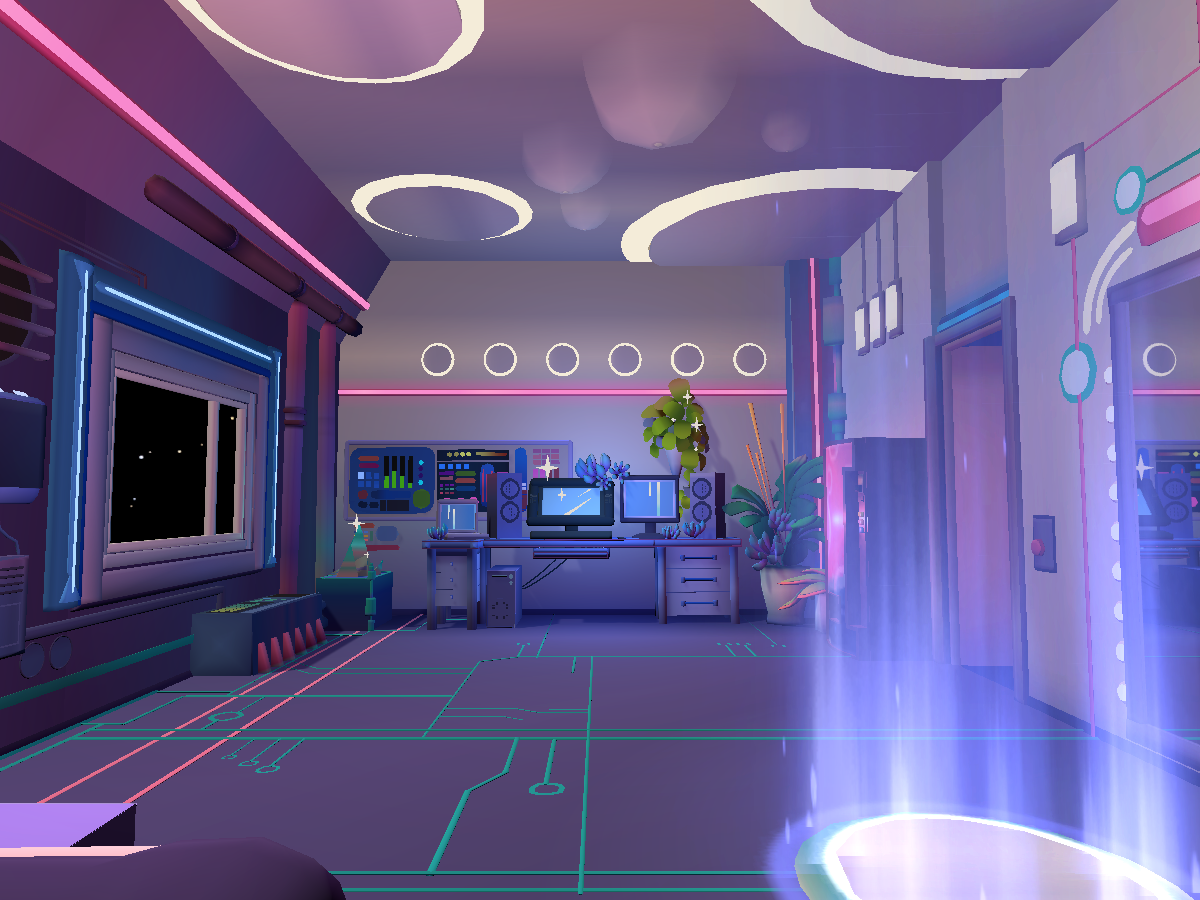
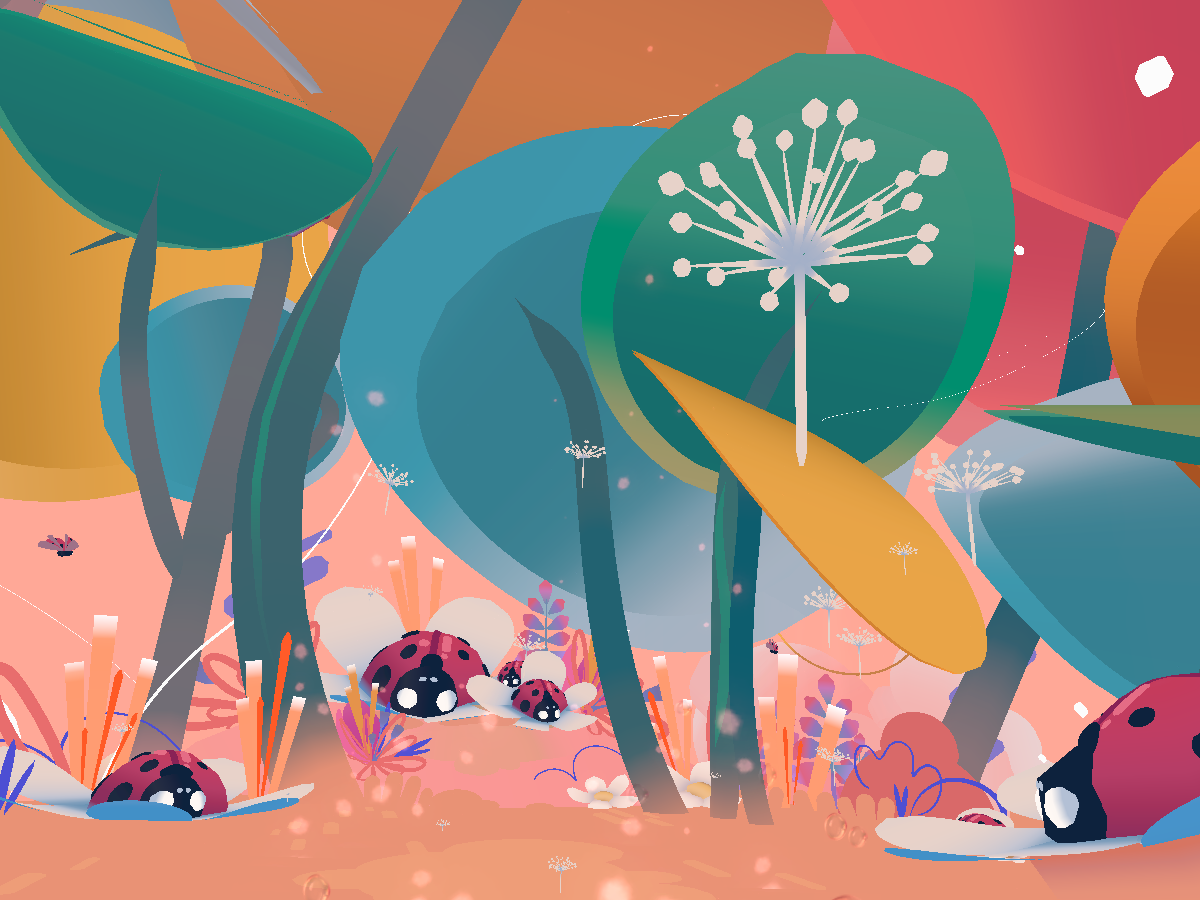
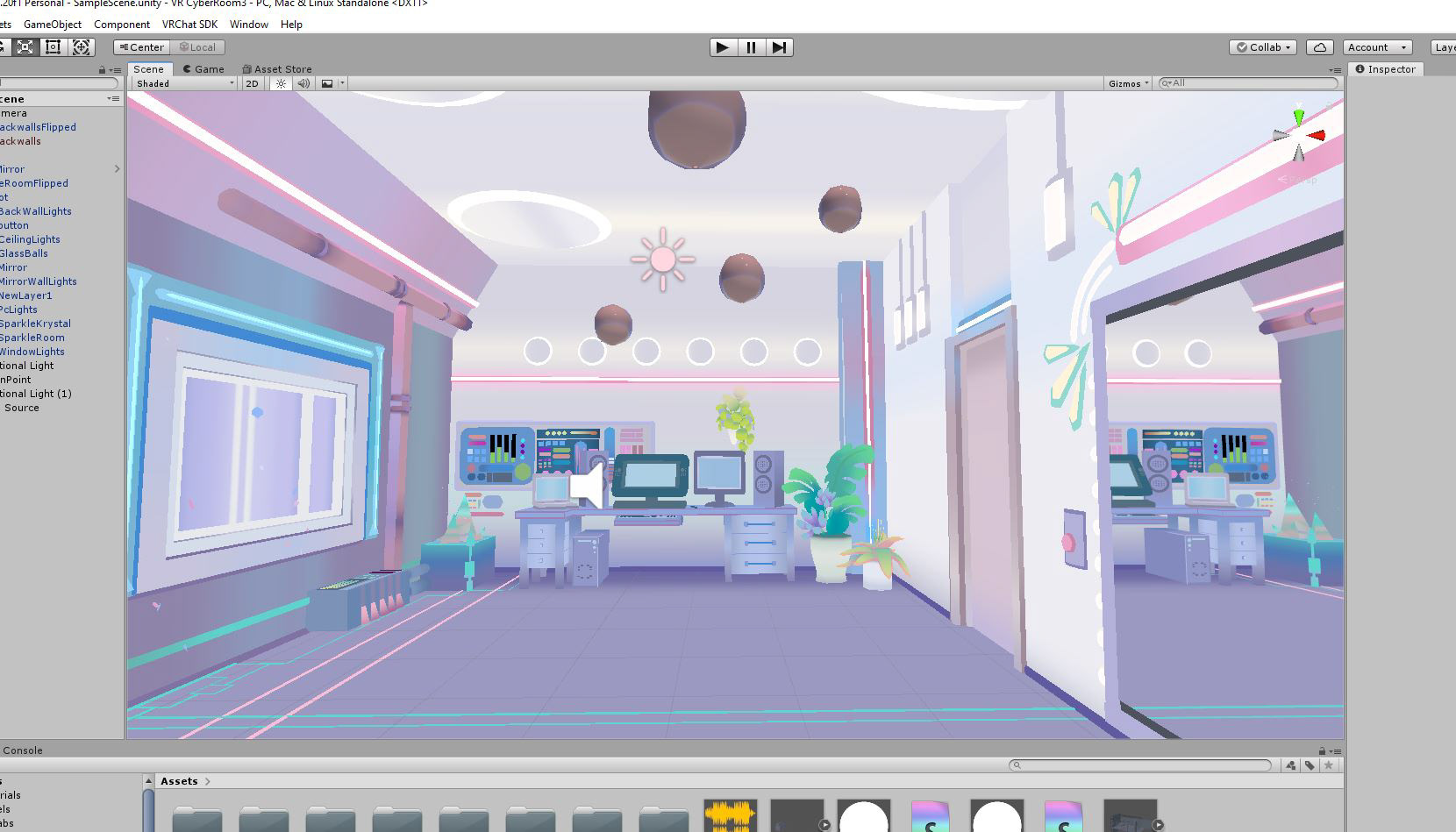
Working within Unity, I learned to design around Android build requirements by treating the technical limitations as design challenges.
One example was modifying an existing vertex colour shader to both receive and cast dynamic shadows while preserving the rich colour information generated in Quill, which made the aesthetic feel more grounded.
My process was driven by experimentation and systems thinking.
When optimising assets, adapting rendering pipelines, or extending existing tools, I focus on how people experience immersive spaces and designing technical solutions that make those experiences more meaningful.